

Are you certain your fashion pop-up event is truly delivering results? Gauging your return on investment may seem intimidating at first, but it is much simpler than you might expect. By keeping track of sales figures, attendance numbers, and sign-ups made at the event, you can clearly measure how each dollar benefits your brand. This guide outlines straightforward strategies to evaluate your event's success. It explains how to balance your costs against the rewards, ensuring every effort helps drive real value for your business. Get ready to uncover the keys to a successful and profitable pop-up experience.
Key ROI Measurement Tactics for a Fashion Pop-Up Event
Begin by applying the basic ROI calculation: (Net Profit divided by Total Investment) multiplied by 100. This formula serves as the building block for a thorough cost-benefit analysis that takes into account both financial returns and brand exposure metrics. To paint a complete picture of your pop-up's profitability, record foot traffic on an hourly and daily basis and pair these figures with sales data. A successful pop-up experience does not depend solely on digital interactions; it also hinges on swift customer engagement, such as sending a welcome email within minutes of sign-up, to forge direct, permission-based connections.
For instance, a holiday pop-up in Soho showcased the benefits of using a plug-and-play WiFi service to enhance visitor engagement. This practical approach highlights how on-site technology can significantly improve overall performance.
Key performance indicators to monitor include:
- Sales
- Foot traffic
- Customer Lifetime Value (CLV)
- Social reach
- On-site sign-ups
Additionally, average conversion rates shed light on the effectiveness of different strategies. For example, discount pop-ups, which typically see a conversion rate of 7.45% compared to 4.82% for standard pop-ups, suggest that targeted discount offers can lead to better financial outcomes.
By combining the ROI formula with these performance metrics, event organizers can accurately balance marketing expenses with cost efficiency. A detailed analysis that integrates real-time foot traffic, prompt email activations, and ongoing sales tracking enables fashion pop-up events to precisely evaluate their return on investment and inform future strategic decisions.
Pre-Event Planning and Data Review for Fashion Pop-Up Event ROI
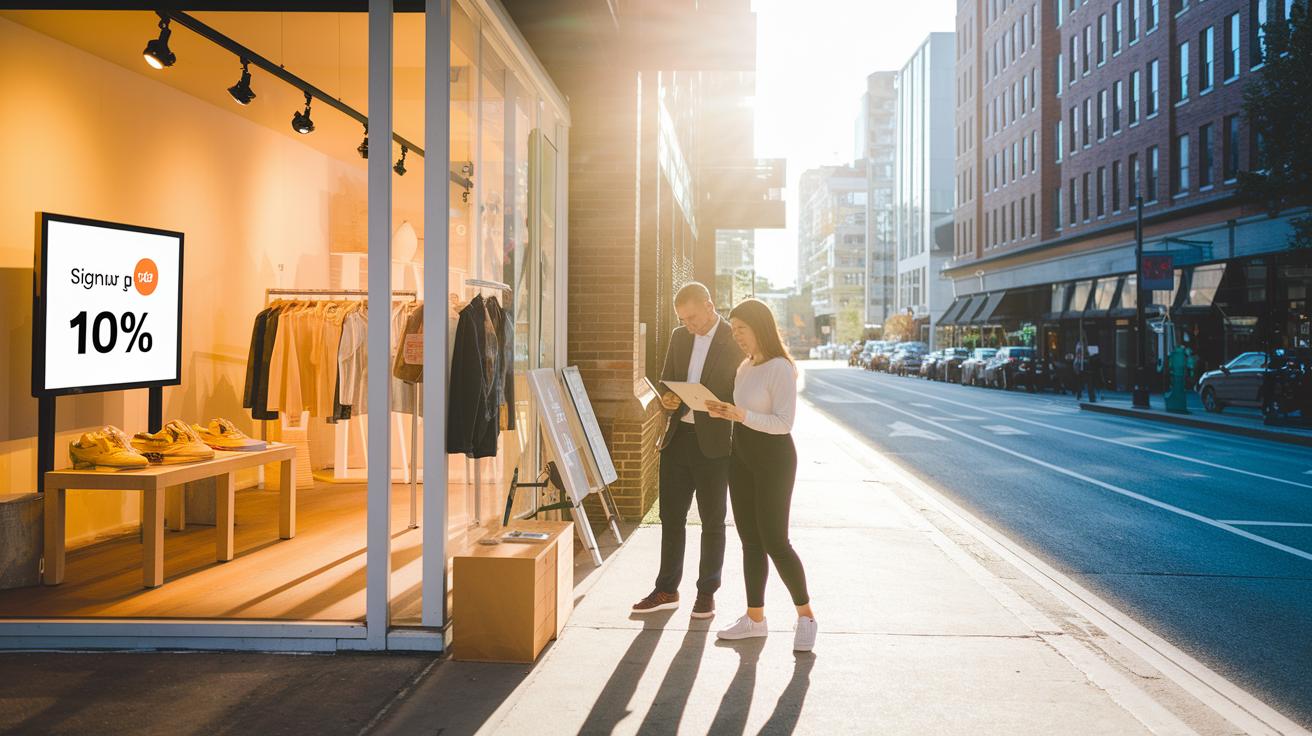
Begin your fashion pop-up campaign by setting clear objectives and establishing measurable benchmarks. Decide on specific goals, such as boosting on-site sign-ups by 10%, and ensure that all tracking tools are activated well before the event starts. Monitor key metrics like revenue, registrations, and attendee sentiment, using opt-in methods to gather customer insights.
To prepare effectively, follow these steps:
- Activate your analytics to record revenues linked to customer clicks and overall activities.
- Determine a conversion tracking period. While a 5-day window offers a broad view, a 2-day span may yield more focused details.
- Develop A/B tests by comparing different campaign variants alongside a control group to identify what truly works.
- Integrate customer surveys during the sign-up process to capture permission-based feedback.
| Attribution Window | Benefit | Drawback |
|---|---|---|
| 5 days | Comprehensive tracking over a standard period | May dilute short-term behavioral insights |
| 2 days | Enhanced precision for immediate interactions | Potentially excludes late conversions |
On-Site Metrics Tracking for Fashion Pop-Up Event ROI
On-site metrics play a vital role by offering immediate insight into how visitors engage and how smoothly operations run. By keeping an eye on these measurements, event organizers can identify the most impactful areas of the pop-up and make decisions based on real-time customer behavior.
Foot Traffic Quantification Methods
Make use of sensors, manual counts, and WiFi-based tracking to tally the number of visitors in key, busy zones. For instance, sensors placed at entrances can automatically update real-time visitor numbers, while WiFi tracking shows how long guests stick around and which spots they prefer. Additionally, manual counts serve as a backup method to verify data during the busiest periods.
Conversion Rate Analytics
To track conversion rates, calculate the proportion of actual purchases against the total number of visitors. For example, if a sensor logs 500 visitors and 50 of them complete a purchase, you determine the conversion rate by dividing 50 by 500. This figure helps organizers measure how effective their marketing efforts and on-site interactions are in turning visits into real sales.
| Metric | Definition | Data Source |
|---|---|---|
| Foot Traffic | Total visitor count in defined zones | Sensors/Manual Counts |
| On-site Sales | Number of purchases completed | POS Systems |
| Online-to-Offline Ratio | Visitors transitioning from digital interactions to physical visits | WiFi Analytics |
| Queue Time | Average waiting time in line | On-site Monitors |
Bringing together these on-site metrics offers a full picture of the pop-up event performance. By linking detailed visitor counts with conversion analytics and operational data, event planners can reliably assess return on investment and make strategic adjustments to optimize space use and boost profitability.
Measuring Post-Event Impact and Fashion Pop-Up Event Brand Exposure
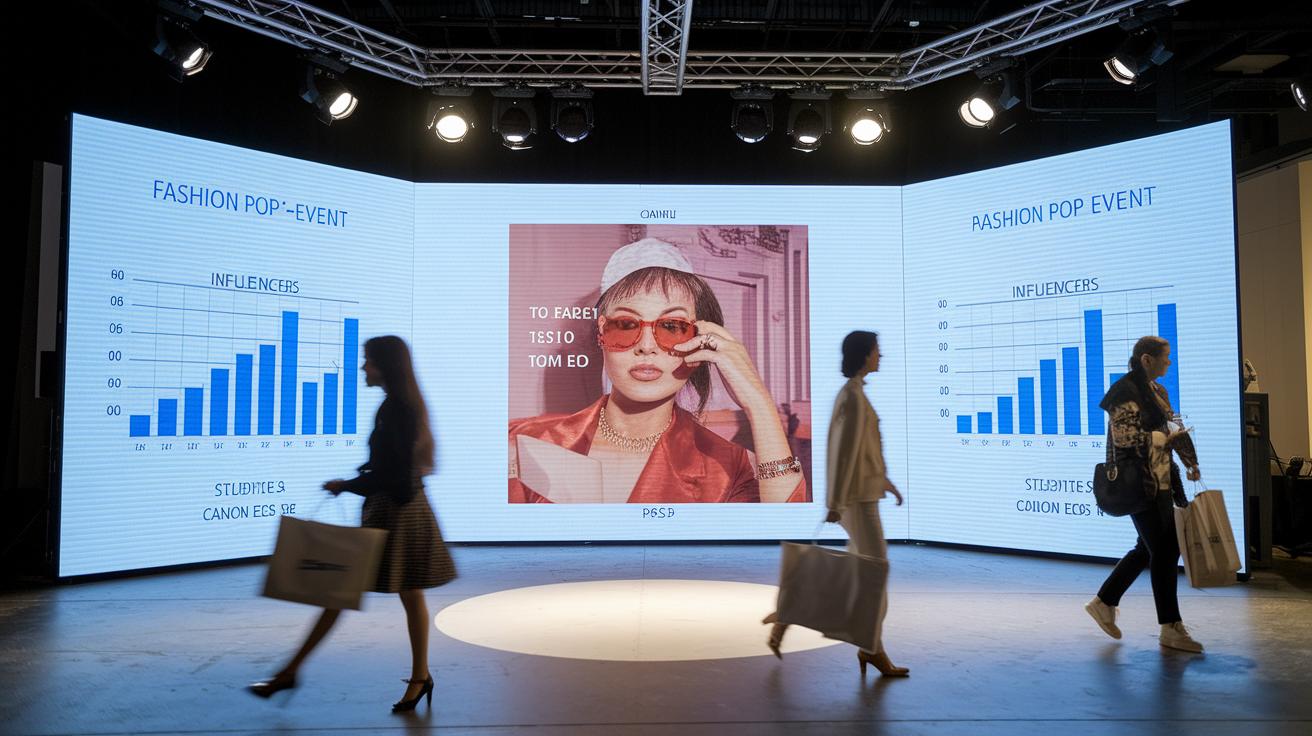
Combining digital signals with tangible results is essential for understanding the true effectiveness of a fashion pop-up event. By looking at both immediate feedback and sustained brand exposure, organizers gain a complete picture of the campaign's effect. Measuring these factors reveals trends in repeat purchases and customer loyalty, while also allowing for smarter future marketing investments by connecting post-event sales to brick-and-mortar foot traffic.
Key performance indicators include:
- social media mentions
- influencer ROI
- CLV uplift
- email/SMS engagement
- repeat visit rate
These metrics serve as a roadmap for evaluating success from both a marketing and customer engagement perspective. When considering Customer Lifetime Value, it is important to recognize the lasting contributions new customers make, ensuring that long-term benefits remain a priority. Immediate digital responses such as email open rates and SMS sign-ups help gauge the impact of online communications, whereas identifying which channels prompted venue visits reinforces the tie between digital outreach and physical experiences.
Bringing these insights together in a comprehensive Post Sales Impact Analysis offers a full view of the pop-up event's performance. By linking online interactions, such as social media activity and direct communication responses, with concrete outcomes like increased in-store sales and repeat visits, organizers can adjust their strategies. This in-depth approach not only fine-tunes future events but also builds stronger brand exposure, ensuring that both immediate successes and lasting customer bonds are effectively nurtured.
Final ROI Calculation and Benchmarking for Fashion Pop-Up Event Success
A thorough evaluation begins with identifying every revenue stream, such as sales, sponsorship income, and additional earnings, along with all associated expenses like marketing, operations, and logistical costs. Differentiating between fixed and variable expenses lays the foundation for an in-depth financial review and a clear assessment of overall profitability.
ROI Calculation Formula
To measure return on investment, apply the formula (Total Revenue minus Total Cost) divided by Total Cost. This calculation reveals the net profit and offers valuable insight into the balance between costs and benefits. For example, if a pop-up event earns $10,000 in revenue while incurring $4,000 in expenses, the resulting ROI is 150 percent, indicating strong financial performance.
Break-Even Analysis
Conducting a break-even analysis is essential to pinpoint when a pop-up event starts to yield profit. The calculation used is: Break-even point equals Fixed Costs divided by (Average Price minus Variable Cost per Unit). Fixed costs cover expenses that remain steady regardless of sales volume, whereas variable costs change based on the number of units sold.
- Gather and verify all revenue and expense data.
- Use the ROI formula to assess overall financial performance.
- Compare the results with industry benchmarks, such as a holiday pop-up achieving over 150 percent ROI.
- Develop strategies for future events that aim to lower costs and enhance revenue.
Final Words
In the action, the framework provided essential insights for event success. The blog post examined comprehensive strategies, from pre-event planning with precise goal setting to dynamic on-site tracking and post-event brand evaluation.
Key performance indicators include:
• Sales
• Foot traffic
• CLV
• Social reach
• On-site sign-ups
Each element interconnects, revealing how to measure ROI for a fashion pop-up event effectively. Embracing these tactics will empower you to optimize every aspect and drive lasting results.
FAQ
How do you measure ROI for a fashion pop-up event online?
Measuring ROI for a fashion pop-up event online involves tracking sales, foot traffic, and brand metrics using the formula (Net Profit ÷ Total Investment) × 100, ensuring all investments and associated returns are captured accurately.
How can an event ROI calculator or template assist in measuring success?
An event ROI calculator or template offers a structured approach to input investments and returns, streamlining data collection and benchmarking performance to inform strategic decisions for future events.
What is the standard event ROI formula?
The standard event ROI formula is (Net Profit ÷ Total Investment) × 100, and it determines profitability by comparing net returns against the total expenditures incurred during the event.
What constitutes a good ROI for events or fundraising efforts?
A good ROI for events or fundraising efforts generally exceeds industry benchmarks, reflecting not only profit but also strategic objectives, with context-specific targets guiding overall success evaluation.
What does a 20% ROI signify for an event?
A 20% ROI signifies that for every 100 units invested, the event generates 20 units in profit, providing a clear and concise measure of financial effectiveness relative to the costs incurred.
How can ROI be displayed visually?
ROI can be displayed visually using graphs, charts, and dashboards that highlight key performance metrics, thereby facilitating easier comparison of investment outcomes over different time periods.
What are the current trade show trends and statistics for 2025?
Current trends and statistics for 2025 indicate a growing emphasis on digital integration and sophisticated data tracking at trade shows, with participants favoring interactive experiences supported by detailed performance metrics.