

Have you ever thought about how one audacious visionary reinvented high fashion? Alexander McQueen truly shook up the scene by challenging every rule of classic tailoring with his bold moves and innovative designs. Growing up in lively, working-class London, his early days spent on iconic tailoring streets sparked a unique creative fire that still inspires designers today.
It’s amazing how his fearless spirit continues to light up the fashion world, reminding us to see style in a completely new light.
Alexander McQueen Fashion Designer: Comprehensive Profile
Born in London on March 17, 1969, McQueen grew up in a bustling working-class home with four siblings, guided by a taxi driver dad and a teacher mom. At just 16, he left school to dive headfirst into apprenticeships at Anderson & Sheppard and Gieves & Hawkes on Savile Row. Imagine starting your career on a legendary street, soaking up the secrets of traditional tailoring, this early foundation set him on a course to completely shake up the luxury fashion scene.
At Central Saint Martins, McQueen blended academic rigor with hands-on skills, graduating in 1992 with top honors. Then, just a year later, he burst into the spotlight with his solo show titled "Taxi Driver." It was here he introduced the now-iconic low-rise "bumster" trousers, a bold move that instantly challenged established fashion silhouettes. His debut wasn't just another show, it was a defining moment that cemented his status as a true industry trailblazer.
In the years that followed, McQueen's daring vision earned him considerable acclaim, including four British Designer of the Year awards between 1996 and 2001 and a prestigious CBE in 2003. His work reimagined the luxury landscape through a fearless mix of technical skill and creative innovation. Every bold step he took pushed design boundaries and left an unforgettable mark on the world of fashion.
Early Influences in Alexander McQueen’s Designer Journey
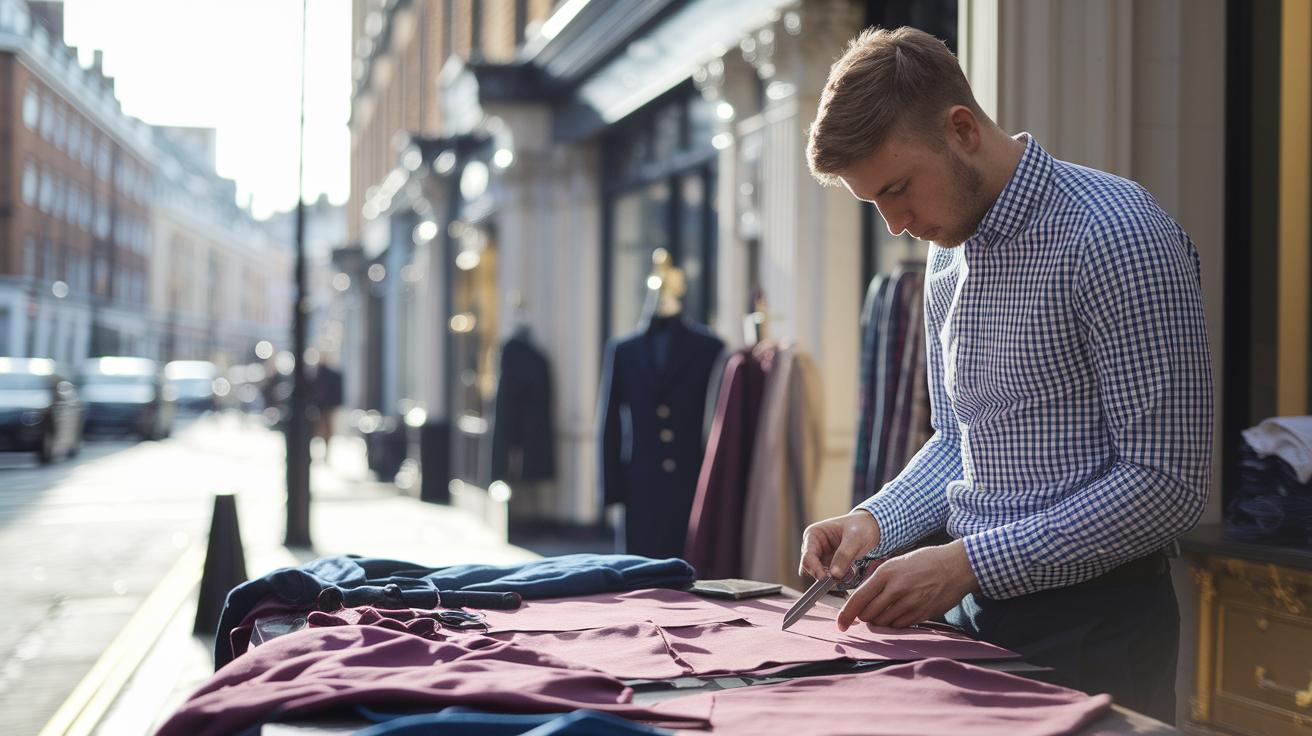
During his early days on Savile Row, McQueen dove into the world of precision cutting and graceful draping. He worked side by side with traditional tailors, learning the nuts and bolts of bespoke craftsmanship. Fun fact: before he made waves in fashion, McQueen honed his craft on London's storied streets, where every snip and stitch whispered a story of precision and passion.
Growing up in East London, he absorbed a rebellious, outsider vibe that spoke to his working-class roots and fierce determination to challenge the norm. Beyond the workshop, he embarked on cultural adventures that exposed him to diverse artistic traditions. Trips to Africa, China, India, Turkey, and Japan introduced him to rich textures and bold patterns that would later inspire his collections.
These early experiences blended technical mastery with global influences, shaping a design language that was both meticulous and daring. Every lesson, whether drawn from the time-honored techniques of Savile Row or international artistic insights, fueled his resolve to redefine fashion.
Signature Aesthetics & Couture Innovation Legacy of Alexander McQueen
From the moment McQueen introduced his "bumster" trousers in 1993, he changed the game entirely. He shifted where and how clothes sat with a simple yet brilliant cut, much like giving an old favorite recipe a surprising new spice. His work felt as fresh as a whispered secret between friends over coffee.
McQueen wasn’t afraid to dive into heavy themes like mortality, passion, and that mysterious charm of romanticism. His creations weren’t just outfits to wear, they carried stories. Take the fall 2006 "bird’s nest" headdress, for instance. Laden with meticulously arranged feathers, it radiated a sense of fragile danger. Then there’s the spring 2008 "butterfly" headpiece, which drifted through the air with the elegance of a butterfly emerging from its cocoon.
His designs blurred the lines between wearable art and pure innovation. In spring 2007, the "Sarabande" dress featured floral patterns that captured both the vulnerability and exuberance of nature. And the fall 2006 "Widows of Culloden" dress mixed dramatic contrasts with bold ideas. Not forgetting the fall 2000 "Eshu" dress, interwoven with glass elements, which danced elegantly between delicacy and structural solidity.
Each creation carries that signature dark romantic edge, continuously challenging traditional couture. Even today, his symbolic layers resonate on modern runways, reminding us that fashion is as much about the stories we wear as the clothes themselves.
Groundbreaking Runway Shows by Alexander McQueen
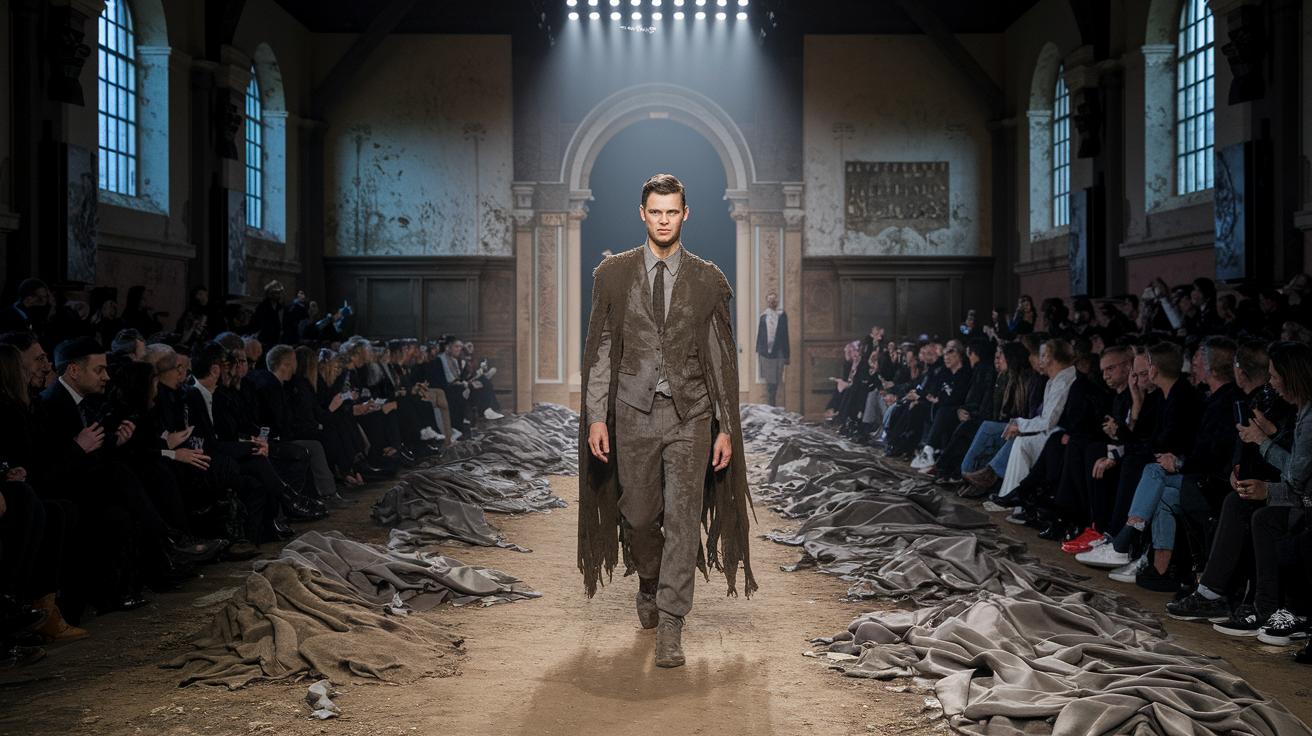
In FW 1995, McQueen turned heads with the provocative show “Highland Rape.” Picture the runway as a gritty battlefield where every rip and tear in the distressed fabric told a story of defiance against English political power. It was raw, unpolished, and downright surprising, a statement that challenged what we usually consider beautiful.
FW 1996’s “Dante” cranked the shock factor up a notch by staging two back-to-back shows in a church and a synagogue. McQueen deliberately pushed boundaries by using these sacred spaces to question our long-held ideas about tradition and reverence. The result? An unforgettable moment that had everyone rethinking where art meets spirituality.
Then came SS 1999’s “No 13.” Remember how Shalom Harlow stole the spotlight in that immaculate white dress? Suddenly, robotic arms swept in and transformed the dress with bold red paint in real time. This wasn’t just about a final look, it was about the process, performance, and the unexpected magic that happens when fashion and art collide.
In SS 2001, “VOSS” took a daring turn with its concept: a model sealed inside a mirrored glass box that felt like a modern padded cell. The setup was intense and immersive, inviting us all to ponder the tension between freedom and confinement in today’s world.
FW 2003 introduced “Scanners,” where the energy ramped up as high-speed wind tunnels animated the garments during the walk. This fusion of force and fabric created a kinetic performance that was raw and electrifying, bringing the runway to life in a whole new way.
Finally, FW 2006’s “Widows of Culloden” brought everything together when Kate Moss emerged from a glass pyramid draped in tartan. Imagine a model breaking free from a crystal-like prison, seamlessly merging age-old tradition with fearless modernity. It was a bold, moving finale that left everyone buzzing long after the show ended.
Iconic Collections & Career Milestones of Alexander McQueen
Alexander McQueen's journey is nothing short of electrifying. He transformed each runway show into an event pulsing with bold innovations and intricate details. Every collection carried its own story, a mix of edgy drama paired with meticulous tailoring, that kept pushing the limits of fashion, much like a conversation with a friend who always has a surprising story to tell.
Take his 1993 "Taxi Driver" debut, for example. This moment gave us the daring "bumster" silhouette, shattering old ideas of what a waistline should be. Later, in 1996, McQueen stepped up as head designer at Givenchy and wowed us again with the Spring 1997 "Search for the Golden Fleece" collection. His work was a blend of technical expertise and theatrical flair, leaving us all eagerly waiting for the next big reveal.
Below is a simple HTML table that outlines key dates, events, and their importance:
| Year | Event | Significance |
|---|---|---|
| 1993 | “Taxi Driver” debut | Introduced the groundbreaking “bumster” silhouette |
| 1996 | Head Designer at Givenchy | Launched the memorable Spring 1997 “Search for the Golden Fleece” collection |
| 2001 | Return to his namesake label; Gucci stake | Secured 51% investment which fueled global expansion |
| 2003 | CBE honor | Awarded for significant contributions to fashion |
| 2006 | Launch of McQ diffusion line | Introduced a youth-focused, more accessible price point |
Each milestone reflects McQueen's relentless dedication to reinventing fashion. His collections are a master class in creativity, blending signature silhouettes with groundbreaking ideas that continue to inspire designers and enthusiasts alike. It's a legacy that not only reshaped the past but also lights the way forward for future innovators in the industry.
Evolution of the Alexander McQueen Fashion House & Brand
Born in London back in 1992, the Alexander McQueen label quickly caught the world's attention with its bold, avant-garde approach. By the mid-1990s, the brand was already turning heads with design stories that celebrated modern uncertainty and grabbed you with a rebellious edge.
When McQueen led at Givenchy from 1996 to 2001, he built key alliances that boosted the label's legacy through smart technical expertise and a blend of global influences that redefined its market stance.
In 2001, a 51% stake sale to Gucci Group (now Kering) helped push the brand well beyond its London roots. Even as the label continued to evolve, it never lost its unique aesthetic or innovative spirit.
Then in 2006, McQueen introduced McQ, a diffusion line that spoke directly to younger, fashion-forward audiences with a more accessible take on luxury. Although this line paused in June 2022, its fresh, energetic approach helped nudge the industry toward greater inclusivity in high fashion.
After McQueen passed away in 2010, Sarah Burton took the reins, weaving his daring vision into contemporary collections that still echo his signature style. This smooth transition solidified the label's high fashion status by marrying McQueen's bold ideas with a lasting heritage.
More recently, in 2023, Seán McGirr stepped in to lead the ready-to-wear segment, ensuring that McQueen's influential spirit continues to inspire every collection.
Enduring Influence & Legacy of Alexander McQueen Fashion Designer
Ever wondered what goes on beyond those unforgettable runway moments? McQueen wasn’t all about the spotlight. In his private world, creativity flowed in the form of quick sketches on scraps of paper that later bloomed into trends still vibrant today. One insider recalled, "He once transformed fabric swatches into dynamic designs with a single, energetic stroke."
In his intimate studio sessions, McQueen encouraged new talent to see beauty in the everyday. He turned discarded textiles into bold, narrative pieces that spoke volumes. Chats with those who worked closely with him reveal a side few have witnessed, a nonstop quest for innovation through rich textures and surprising details. As one collaborator put it, "During a midnight session, he repurposed unconventional materials into wearable art," highlighting his fearless approach to experimentation.
A quick look at his lasting influence:
| Aspect | Impact |
|---|---|
| Creative Process | Spontaneous concept sketches and material experimentation |
| Mentorship | Inspiring future designers with hands-on, intimate studio sessions |
Final Words
In the action, we revisited the bold journey of the alexander mcqueen fashion designer, from his early apprenticeships to groundbreaking runway spectacles. His signature touches transformed couture, daringly pushing boundaries and sparking fresh creativity.
Next, we uncovered how his astonishing collections and pivotal career milestones continue to shape the industry. The spirit of his innovative flair stays alive, lighting up the fashion scene and inspiring everyone to bring their unique style into the spotlight.
FAQ
Alexander McQueen shoes
The Alexander McQueen shoes embody a bold fusion of edgy design and expert craftsmanship, offering statement footwear that elevates any wardrobe with sleek, artistic flair.
Alexander McQueen brand
The Alexander McQueen brand stands for fearless innovation and striking silhouettes, merging traditional tailoring with avant-garde aesthetics that continue to shape high-fashion trends.
Alexander McQueen death
The Alexander McQueen death in 2010 marked a sorrowful moment in fashion history, deeply impacting the industry and fueling ongoing tributes to his visionary spirit.
Alexander McQueen wife
The Alexander McQueen wife, Sarah Burton, carries forward the designer’s legacy as creative director, ensuring his iconic vision lives on through continued innovation and refined collections.
Alexander McQueen Collections
The Alexander McQueen Collections showcase dramatic narratives and meticulous craftsmanship, merging technical precision with daring ideas to create unforgettable runway moments.
Joyce McQueen
The name Joyce McQueen appears infrequently in public discussions and does not feature prominently in recorded accounts of Alexander McQueen’s personal or professional life.
Lee Alexander McQueen
The reference to Lee Alexander McQueen is often a mistaken iteration, as Alexander McQueen was known solely by his iconic name, which underscored his singular creative identity.
Alexander McQueen daughter
The query about an Alexander McQueen daughter reflects a common misconception, as there are no widely documented reports of him having any children, with his legacy carried through his art and brand.
What caused Alexander McQueen’s death?
The reported cause of Alexander McQueen’s death was suicide, a tragic event that sparked important conversations about mental health and the pressures within the creative community.
Was Alexander McQueen a fashion designer?
The Alexander McQueen identity as a fashion designer is undisputed—he was a trailblazing creative known for revolutionary designs that reshaped modern couture.
What was Alexander McQueen’s net worth when he died?
The estimation of Alexander McQueen’s net worth at the time of his death falls in the tens of millions, reflecting his significant influence and success within luxury fashion.
What was Alexander McQueen’s most famous design?
The Alexander McQueen most famous design is often cited as the groundbreaking “bumster” trousers, a revolutionary silhouette that sparked wide-ranging conversations about modern tailoring.